
When AI worship becomes a sermon, who is speaking?
What is AI worship and how does it work? Explore how churches experiment with AI-led prayers, music, and sermons—and the debates around it.

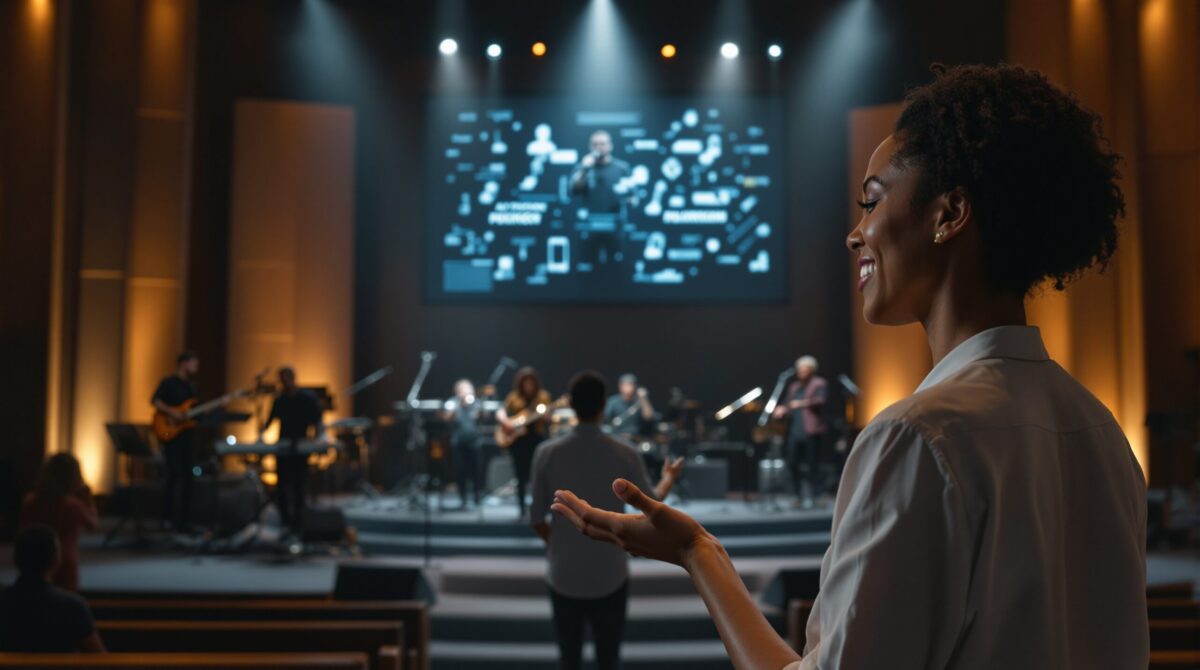
Church leader reviewing an AI-assisted sermon or worship plan on a screen in a modern sanctuary
Quick answer
AI worship is controversial for one simple reason: the same model that can clean up a bulletin can also sound like it has spiritual authority. The safe line is not “AI or no AI”; it is whether AI is drafting support material or speaking as the voice of the service. If you lead worship, the fastest way to judge a use case is to ask three questions: who approves it, who is accountable, and would people feel misled if they knew AI helped write it?
For neutral context, this guide cross-checks the topic against real church experiments and AI ethics work: AP reporting on pastors testing ChatGPT sermons, AP reporting on an AI-built Lutheran service in Helsinki, and the Rome Call for AI Ethics. The pattern is consistent: AI can support drafting and operations, but trust, disclosure, and human accountability become the real issue when religious language is public.
When people search for AI worship, they usually mean one of two things: either AI is being used inside worship, or AI is being treated as if it deserves reverence, trust, or authority. Those are not the same problem, but they collide quickly. In church work, the difference matters because worship is not just content production. It is a public act of meaning, memory, and trust.
This page is for ministry teams, church leaders, and faith-based communities that need a practical boundary, not a panic cycle. The question is not whether AI can write. It can. The question is whether the output belongs in a role that carries prayer, proclamation, pastoral care, or doctrinal weight. That is where the line gets hard.
Metaphor: people worshiping the machine
Sometimes “AI worship” is only a metaphor. It describes the way people can start treating a model like an oracle, a savior, or a shortcut to certainty. That reaction is cultural as much as technical. It is what happens when a tool sounds confident enough to feel wiser than the person using it.
This concern is no longer theoretical. In 2025, AP described a Helsinki Lutheran service assembled mostly with AI-generated sermons, songs, visuals, and pastor avatars; people found it interesting, but clergy and worshippers still said it could not replace human-led worship. In Switzerland, the “AI Jesus” experiment at Peter’s Chapel drew hundreds of conversations and the same uncomfortable question: when a machine answers in religious language, do people treat it as a tool, a performance, or a spiritual voice? Those examples show why vague boundaries are not enough.
Literal use: AI inside worship tasks
The other meaning is literal. AI gets used in prayer drafting, sermon outlining, lyric planning, livestream captions, bulletins, visitor follow-up, or service scheduling. That is where the real operational question appears: is the system helping the ministry team work faster, or is it taking over a role that should stay human?
Churches often learn this the hard way. A volunteer uses AI to “improve” a prayer, the wording sounds polished, and no one notices until a congregation member asks who actually wrote it. At that point the issue is no longer grammar. It is authorship, disclosure, and trust. The same logic appears in our guide to membership church software: the more the platform shapes how people experience the community, the more control and accountability matter.
Why the phrase causes stronger reactions than “AI in church”
“AI in church” sounds operational. “AI worship” sounds like a line has already been crossed. That difference is emotional, but it is also practical. The phrase suggests either reverence for the machine or machine involvement in reverence itself.
That is why the debate is not solved by asking whether the model is conscious. The real issue is that AI can produce language that feels composed, devotional, and certain without having any standing to speak. A church can replace a slide deck in minutes. Replacing trust is slower and more expensive. In a small congregation, one awkward AI-generated prayer can create 2-3 weeks of side conversations, and the media team often hears about it before the pastor does.

If you want the wider operational context, church platforms often need to manage the same workflow across members, events, messaging, and content. That is why branded systems matter: they keep the church’s voice, approvals, and records in one place instead of scattering them across disconnected tools.
Order-of-service drafts, announcements, and service notes
AI works best when the task is editorial. It can turn rough notes into a cleaner order of service, compress a long announcement into something people will hear, or suggest alternate wording for a welcome slide. None of that requires spiritual authority. It requires clarity, speed, and a human reviewer who knows what belongs in the room.
That distinction matters because a service packet is not sacred by default. It is a working document. In a busy church, especially one running multiple services or bilingual notes, AI can save 1-2 hours every week just by handling cleanup. That is not a theological breakthrough. It is a practical one.
Music planning, lyric support, and media copy
Worship teams often need options fast: a setlist theme, a verse reference, slide wording, or livestream text that does not sound clumsy. AI can help structure those pieces, especially when the team is racing to adjust to a last-minute speaker change or a missing volunteer.
The limit is simple: the machine can suggest, but people still decide what fits the congregation, the denomination, and the moment. Lyrics and spoken lines carry memory. One flat phrase on a projected slide can distract a room of 200 more than a typo in an email. If your team also handles website updates, event pages, or gated content, the workflow logic in how to build a church website with WordPress is a useful companion because it treats content ownership as part of the system, not an afterthought.
Admin work around the service
Announcements, volunteer reminders, visitor follow-up, caption drafts, and event notices sit safely on the support side of the line. These are repetitive communication tasks. They do not ask AI to carry blessing, confession, or doctrinal weight.
That is where the time savings become visible. In many small teams, 10-20% of weekly admin is the same copy work repeated in slightly different formats. Cut that repetition, and Friday planning gets calmer. The healthy version of AI worship support looks boring: fewer duplicated tasks, fewer last-minute edits, and fewer handoffs that lose context.
AI-led prayers and public spiritual speech
Once AI is fronting a prayer, blessing, exhortation, or confession as if it has standing to speak, the role changes. That is no longer drafting help. It is a claim to voice. Some traditions will reject that immediately; others may allow it only if the human author and reviewer are unmistakable.
The reason is not just technical accuracy. Prayer is a public act of address. If the congregation believes a machine is speaking on behalf of the church, the problem is perception as much as theology. A room that feels misled will remember that feeling longer than it remembers the exact wording.
Sermon drafting vs sermon delivery
Using AI to outline a sermon, sort research, or tighten a draft is very different from delivering an AI-generated sermon as though it carries the pastor’s discernment. The first is assistance. The second starts to look like impersonation, even when the words are polished.
That is the fault line that makes this topic so easy to misread. The issue is not whether a machine can produce a decent paragraph. The issue is whether a person with pastoral responsibility is still the speaker of record. A sermon without an accountable speaker is just content with religious vocabulary.
Decision-makers should also notice the operational side: if your church already uses a branded member platform, the voice question spreads beyond the pulpit. The same approval chain that protects sermons should protect recordings, prayer posts, and member-only teaching. That is why our cluster guide on membership church software matters here too; governance is not a separate topic from content.
Pastoral judgment, sacraments, and grief moments
AI should not make pastoral calls. It cannot weigh doctrine, local context, family history, and the lived tension in the room the way a pastor can. It should not decide what to say at a funeral, how to frame confession, or whether a person should receive a particular pastoral response.
Grief and sacramental moments carry the highest cost of error. A mistake in a slide caption is annoying. A mistake in a funeral message can land in memory for years. The stakes are relational first, reputational second, and operational third. That is why churches that are otherwise comfortable with AI often draw a hard line here.
Decision table for worship use cases
| Use case | Acceptable | Risky | Not recommended | Why |
|---|---|---|---|---|
| Order-of-service draft | Yes, with review | If auto-published | No | Editorial work, low authority risk |
| Sermon research outline | Yes | If sources are unchecked | No | Useful for structure, not for final claims |
| Sermon delivery | Rarely | Only with explicit disclosure | Usually not | The human speaker must own the message |
| Prayer draft | Sometimes | If it sounds like machine-authored devotion | Often | Prayer carries public spiritual voice |
| Setlist planning | Yes | If doctrine or tone is sloppy | No | Support task when reviewed by people |
| Livestream captions | Yes | If captions are not checked | No | Accessibility use case, but errors can mislead |
| Visitor follow-up email | Yes | If the tone sounds fake | No | Communication task, not spiritual authority |
| Pastoral counseling | No | Very high risk | Yes | Human care and judgment are non-negotiable |
One named reviewer, not “the team”
Every AI-assisted worship workflow needs a named human reviewer. Not a vague “team review,” not a shared assumption, but a person who can approve, rewrite, or reject the draft before it reaches the room. If nobody is accountable, the system is not ready.
This is where denominational differences matter. A liturgy-heavy church, a charismatic congregation, and a student ministry will not draw the same line. That is normal. Pretending there is one universal rule usually creates more confusion than the AI itself. A church that wants to formalize community communication and content approvals should think in system terms, not one-off prompts. The practical side of that approach is covered again in ai for churches.
Disclosure and authorship transparency
People rarely object to a tool they can see. They object to being surprised by it. If a prayer, reading, blessing, or pastoral note was materially shaped by AI, leaders should decide whether the congregation needs to know. In high-trust settings, transparency often protects credibility more than secrecy protects comfort.
Disclosure also protects staff. It separates what the human authored from what the machine drafted, which matters when someone later asks who said what and why. That is especially important when the church is using a branded digital home for members, recordings, or gated content. The same control problem appears in the platform layer, which is why our guide to how to build a church website with WordPress is relevant here as well: ownership and visibility go together.
Accountability for tone, doctrine, and errors
AI will produce language that sounds certain even when it is wrong. In worship, tone can carry as much weight as facts. A wrong phrase in a grief message or a poorly chosen line in a prayer can do more damage than a factual typo in an announcement.
Before the tool gets approved, the church should know who fixes errors, who maintains style, and who decides when AI is no longer appropriate for a given ministry role. This is a policy question, not a prompt question. If the answer is unclear, the safest decision is to keep AI in drafts only.
Individual counseling and spiritual direction
Do not use AI as a substitute for counseling, direction, or discernment. It may suggest language, but it cannot carry responsibility for the person in front of you. In grief-heavy contexts, that gap becomes obvious quickly: a templated answer can make someone feel unseen, while a human listener can notice the pause and the thing that was not said.
Impersonating clergy voice or a congregation leader
Using AI to imitate a pastor, worship leader, elder, or chaplain crosses into false voice fast. Even if the wording is good, the impersonation risk is real. The church may think it is saving time while quietly weakening trust in the real speaker.
Most communities tolerate assistance. They are much less forgiving about pretending the assistant is the authority.
Anything that changes a tradition’s doctrine of authority
Some churches can adopt AI as a drafting aid without theological trouble. Others cannot. If a tradition says human proclamation, ordination, or sacramental authority is essential to the act itself, AI should stay outside the core ritual. That is not anti-technology. It is doctrinal consistency.
The useful rule is simple: if the tradition says a human must speak, the machine may help prepare the words, but it should not become the voice. That keeps the ministry team from confusing speed with legitimacy.
5 checks before AI touches worship content
Before the next Sunday draft gets opened, run the decision through five checks. It takes less time than repairing trust after an awkward service, and it usually prevents the kind of confusion that leads to 2-3 follow-up conversations the next week.
- Separate editorial work from authority-bearing work. If the task requires spiritual authority, stop.
- Assign one human owner who can approve, rewrite, or reject the draft before anyone else sees it.
- Decide whether disclosure is needed. If surprise would change how people judge the message, disclose.
- Check whether the wording matches doctrine, tone, and local practice. A line can be grammatical and still wrong for the room.
- Keep the workflow in one owned system if your church already manages content, members, events, and messaging across the same channel.
Scrile Connect for churches that want control without losing pace
When a church or faith-based organization uses AI around worship, the product question is not “which model should write the prayer?” It is more practical: where does the community live, who can approve public content, and how do members know the message still comes from accountable people? That is where Scrile Connect fits. It gives churches and faith communities a branded space on their own domain for member areas, private groups, gated resources, event access, livestream archives, and direct communication.
The value is control, not automation for its own sake. A ministry team can keep sermons, announcements, study materials, event reminders, and member discussions in one owned environment instead of spreading them across social feeds, email tools, and ad-driven platforms. That makes human review easier: staff can decide what is public, what stays private, who can post, and which workflows need approval before AI-assisted copy reaches the congregation.
This matters most for churches, ministries, educators, and niche faith communities that are building more than a Sunday bulletin. Paid memberships, private cohorts, livestream replays, pastoral resources, volunteer groups, and donor or member updates all need roles, permissions, moderation, and a consistent voice. Scrile Connect does not solve theology; it gives the organization a controlled infrastructure layer so human leaders can keep theology, tone, and trust in their own hands.
If your immediate problem is not “How do we automate worship?” but “How do we keep worship-adjacent communication organized, reviewed, and owned?”, start by mapping the member journey: public content, private groups, events, livestream archives, paid or gated access, and direct messages. Then choose a platform that lets humans approve the voice while software handles the infrastructure.
Ready to build the setup behind this?
If this is the operating problem you need to solve, use the product page as the next step. It shows where build your setup fits and what the platform covers beyond a single payment widget.
Frequently asked questions
Can AI draft a prayer if a human approves it?
Sometimes, yes. The approval matters more than the draft itself. If the church treats the prayer as human-authored and AI only as a writing aid, the risk is lower. If the machine is seen as the speaker, the line is crossed.
Is it acceptable to use AI for sermon research but not for delivery?
Usually, yes. Research, outline cleanup, and source summaries are support tasks. Delivery is different because the sermon is a public act of authority and accountability.
What if the congregation likes AI-generated worship content?
Preference does not settle the question. A congregation may like the speed or polish, but leaders still need to decide whether the content fits the church’s doctrine, tone, and rules for authority. Popularity can hide a boundary problem for a while.
When does disclosure become mandatory rather than optional?
When surprise would change how people judge the message. If the content looks like a prayer, blessing, sermon, or pastoral note, undisclosed AI involvement can feel deceptive even when the wording is sound. The higher the spiritual weight, the stronger the case for disclosure.
Should a church avoid AI entirely if its doctrine centers human pastoral authority?
Not necessarily. Many churches can still use AI for admin, captions, drafts, and scheduling. What they should avoid is letting AI take the place of the person whose role carries the authority, care, or sacramental meaning.
What is the fastest way to tell a worship workflow is too risky for AI?
Ask whether a mistake would be annoying or spiritually costly. If the answer is spiritually costly, keep AI out or limit it to private drafting behind human review. That single test catches most bad use cases.
